Vision impairment is a term used to describe any degree of sight loss and encompasses everything from partial vision loss to full blindness.
Vision Impairment in Australia
Approximately 300,000 people in Australia are vision impaired. This number is rapidly increasing with one person diagnosed with a vision impairment every 65 minutes.
Nine out of 10 visually impaired people have residual vision, while the remaining one out of 10 visually impaired have no sight at all.
Of Australia’s visually impaired, around 31% use a long white cane, 2-3% use a guide dog and the remainder use their residual vision.
The largest two causes of sight loss in Australia are:
With the number of visually impaired Australians expected to increase to 420,000 by 2021, it is imperative all public premises are designed to assist and support all degrees of vision impairment.
What is luminance contrast?
Luminance contrast is the light reflected from one surface or component, compared to the light reflected from another surface or component.
It is a crucial provision for vision-impaired occupants, delineating clear visual contrasts between all elements of the door system, including door frames, jambs and glazed surfaces.
Visual indicators are particularly important on glass doors and sidelights, informing individuals to the presence of fully glazed panels in the path of travel.
Section 13.1 of AS 1428.1-2009 states a minimum luminance contrast of 30% must be provided between ONE of the following:
A minimum 50mm width area of luminance contrast is a requirement for all new doorways.
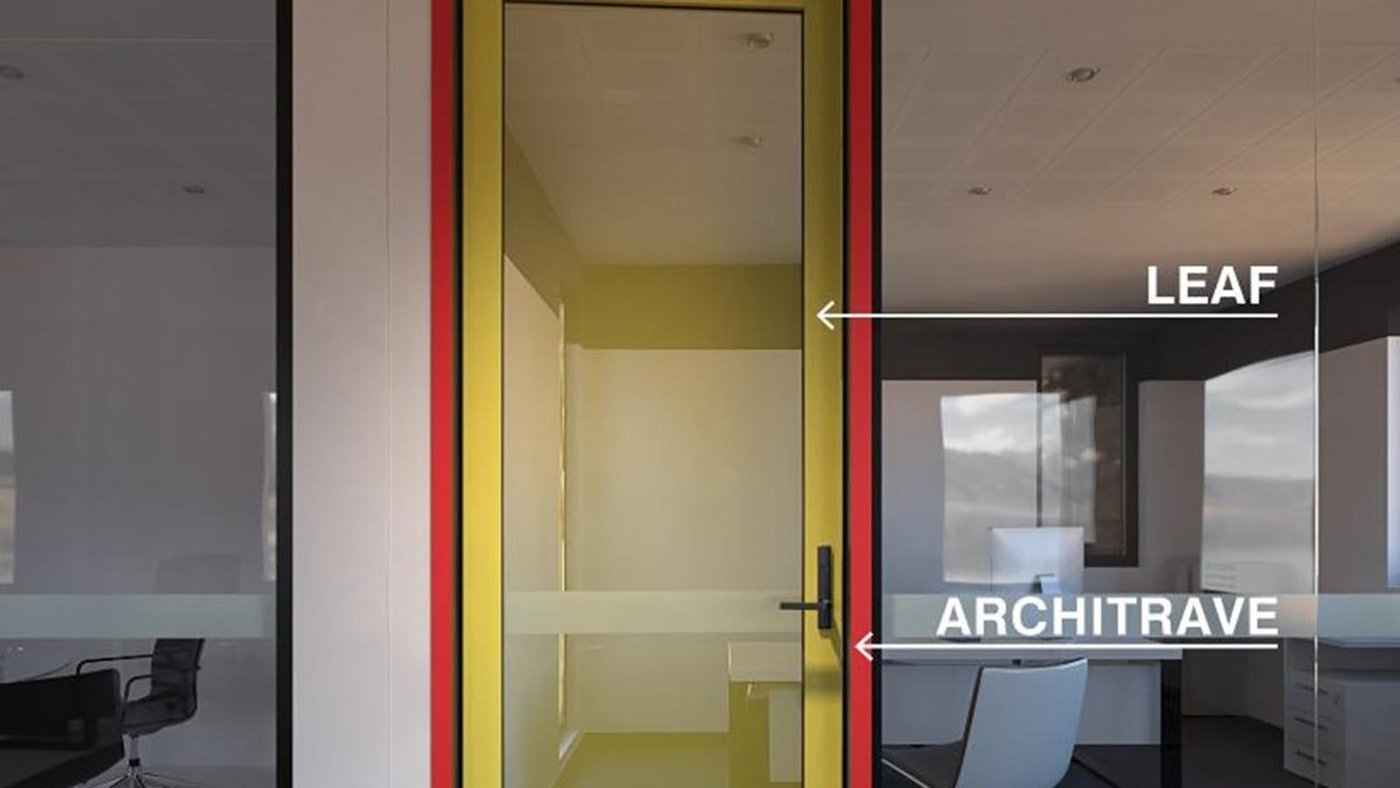
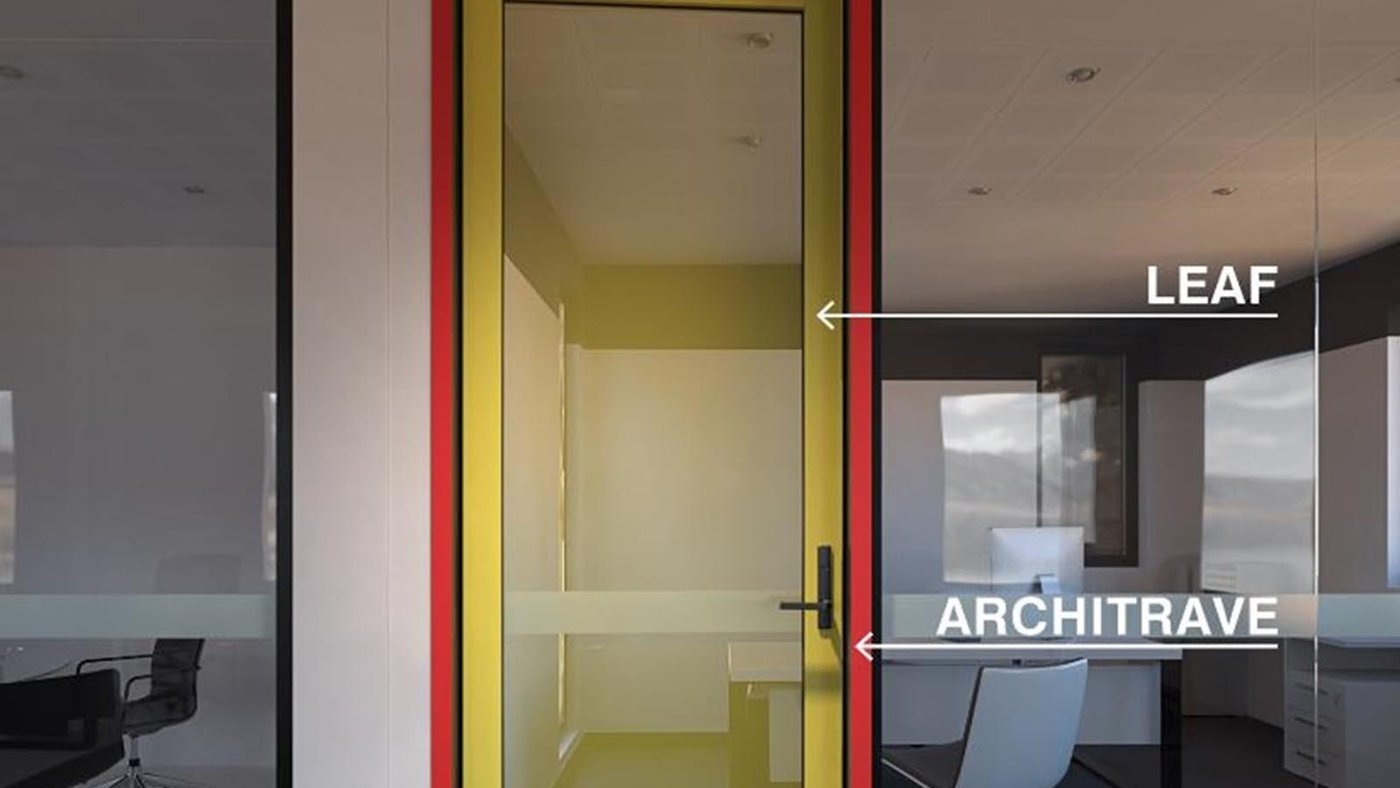
 Contrast is achieved between the Door Leaf and the Architrave.
How do you find the Light Reflectance Value?
Light reflectance value (LRV), is a measure of visible and usable light that’s reflected from a surface when illuminated by a light source. To test building element contrasts, where the LRV’s are known, a luminance calculator can be used to determine the luminance contrast ratio. LRV’s for each colour can also be found in the rear of a colour fan deck.
 How do you find the Luminance Reflectance Value?


Healthcare fitouts sit at one of the most demanding intersections in the built environment. For architects, getting the specification of doors, glazing, and partitioning right...


Sound is one of the most powerful forces in the built environment and one of the least consciously considered in early design.


The way we meet has fundamentally changed. Where a meeting room once needed to contain a group conversation and keep corridor noise out, it now has to do something far more demanding...